The Bitcoin (BTC) price

Value –> Price

The value of a product is determined by its capacity to fulfill human desires, and furthermore, the true value is contingent on the product’s usefulness in its least significant application, known as marginal utility.

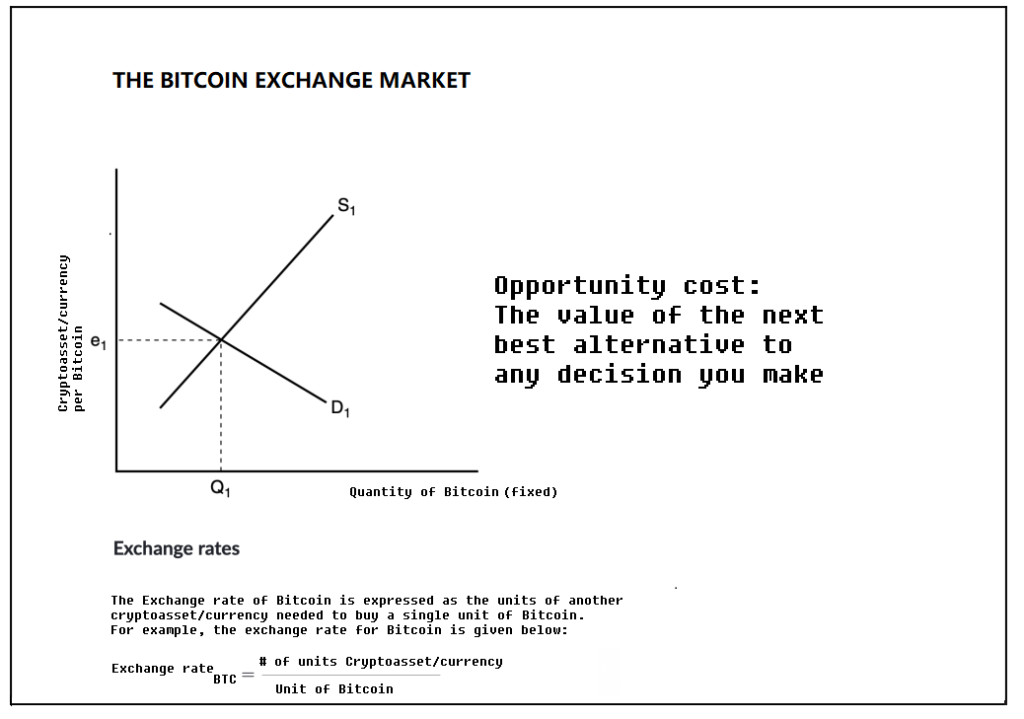
The supply and demand dynamics of Bitcoin (BTC) play a pivotal role in its price trajectory. One major event that impacts these dynamics is the Bitcoin halving, which takes place approximately every four years. To grasp this concept fully, Let’s break down the concepts of supply and demand, dive into the outcomes of a Bitcoin halving event, and explore the factors that influence supply and demand.

Supply and Demand for Bitcoin:

Supply: Bitcoin boasts a fixed supply cap of 21 million coins. This implies that there will never exist more than 21 million Bitcoins. This restricted supply stands in stark contrast to traditional fiat currencies, which can be printed by central banks, potentially leading to inflation. The assured and limited supply of Bitcoin constitutes one of its fundamental attributes.

Demand: The demand for Bitcoin is driven by an array of factors, including its role as a store of value, a medium of exchange, unit of account and speculation by investors. Factors such as institutional adoption, regulatory developments, and macroeconomic conditions also exert their influence on demand.

Bitcoin Halving: The Bitcoin halving is an event that transpires approximately every 210,000 blocks, or roughly every four years. During this event, the reward that miners receive for validating transactions and appending them to the blockchain is halved. In Bitcoin’s nascent stages, miners were rewarded with 50 BTC per block. After the initial halving, this figure decreased to 25 BTC, then 12.5 BTC, 6.25 BTC, 3.125 BTC, and so on.

By the way, please have a look here: https://mempool.space/ and explore information about the next predicted block, the most recently mined block along with its timestamp, block number, the total number of transactions, and transaction fees.

It’s worth noting that each block successfully mined by a miner is rewarded with the current sum of 6.25 BTC in addition to the collected transaction fees. Read more here

Impact on Supply and Demand:
Impact on Supply:

Supply Reduction: The Bitcoin halving diminishes the rate at which new Bitcoins are generated, effectively curbing the supply introduced into the market. This event enforces scarcity, mirroring the mining of precious resources like gold. Consequently, the supply of new Bitcoins is reduced by 50%, potentially leading to decreased selling pressure from miners.

Lost Bitcoins: Over time, a substantial number of Bitcoins have been lost due to forgotten private keys or inaccessible wallets. These misplaced Bitcoins effectively shrink the circulating supply, augmenting the value of each remaining Bitcoin slightly.

Whale Holdings: The circulating supply of Bitcoin can be affected by large holders (whales) who may opt to move or “hodl” their coins. The decisions made by these whales can exert an influence on supply dynamics.

Miner Holdings: Miners, who earn fresh Bitcoins, confront the decision of either selling them to cover expenses or holding them as an investment. The behavior of miners influences the pace at which new supply infiltrates the market.

  • Mining Difficulty: Bitcoin’s network adjusts its mining difficulty approximately every two weeks to ensure that new blocks are mined, on average, every ten minutes. If the total hash rate increases significantly (more mining rigs or better “new” mining rigs), the network may respond by increasing the mining difficulty. As a result, miners need to invest more computational power and resources to validate transactions and earn rewards. This can lead to increased operational costs for miners, which may affect their selling behavior. They might need to sell more of their newly minted Bitcoins to cover expenses, potentially increasing selling pressure on the market.

Exchange Reserves: The quantity of Bitcoin stashed in the wallets of cryptocurrency exchanges can impact supply. A reduction in exchange reserves might signal that users are transferring their Bitcoins to cold storage for long-term retention.

Companies (Public and Private): The quantity of Bitcoin stashed in the wallets of companies can impact supply.

Fund/ETF Reserves: The quantity of Bitcoin stashed in the wallets of cryptocurrency funds and ETFs can impact supply.

Government entities: The quantity of Bitcoin stashed in the wallets of governments can impact supply.

Bitcoin locked in contracts (Layer 2s and other blockchains):

The quantity of Bitcoin stashed in the wallets of Layer 2s and other blockchains can impact supply.

Forks and Airdrops: Forks, where a new cryptocurrency is spawned based on the Bitcoin blockchain, can affect the supply. Bitcoin holders may receive an equivalent amount of the new cryptocurrency, affecting their decisions to buy, sell, or retain both assets.

Impact on Demand:

Retail Adoption: As more merchants and businesses embrace Bitcoin as a payment method, its utility as a medium of exchange expands. Enhanced utility can stimulate demand from consumers keen on employing Bitcoin for transactions.

Institutional Adoption: A surge in participation by institutional investors and financial institutions can galvanize significant demand for Bitcoin. High-profile investments by companies have catapulted Bitcoin into the spotlight as a potential store of value and hedge against inflation.

Market Sentiment: News events, trends on social media, and public sentiment have the potential to drive mainstream adoption, sparking interest and increasing demand among both retail and institutional investors. Positive developments, regulatory clarity, or endorsements from influential figures can trigger FOMO (Fear of Missing Out) and amplify buying interest.

Cross-Border Transactions: Bitcoin can be utilized for cross-border transactions, offering a more cost-effective and expeditious alternative to traditional remittance services. Demand may surge in regions burdened by substantial remittance volumes.

Peer-to-Peer Trading: Peer-to-peer (P2P) trading platforms empower individuals to directly buy and sell Bitcoin. P2P trading can constitute a noteworthy source of demand, particularly in countries grappling with regulatory constraints.

Education and Awareness: As individuals become more enlightened about BTC and its potential advantages, it can result in heightened demand across a wider spectrum of the populace.

Macroeconomic Factors: Economic conditions, inflation rates, and currency stability in various nations can trigger demand for Bitcoin. In regions grappling with economic uncertainty or hyperinflation, some individuals turn to Bitcoin as a hedge against currency devaluation. In areas where traditional banking services are scarce, Bitcoin can serve as a financial lifeline.

  • Global Events: Geopolitical events like capital controls, political upheaval, or trade disputes can boost demand for Bitcoin in regions ensnared by the ramifications of these events.
  • Global Economic Events: Major economic upheavals such as recessions or financial crises can influence demand for Bitcoin as investors explore alternative assets that exhibit a low correlation with traditional markets.
  • Regulatory Changes: Regulatory determinations and governmental cryptocurrency policies can wield influence on demand. Clear and favorable regulations can invigorate adoption, while restrictive regulations can dampen demand. Remember it is not possible to ban Bitcoin it will keep making blocks.

Hash Rate:

  • Security and Trust: A higher hash rate is generally associated with increased network security. A robust and secure network can boost confidence among investors, potentially attracting more institutional and retail participants.
  • Network Health: A consistently high hash rate suggests a healthy and active mining ecosystem. A robust network can handle a higher volume of transactions and provide faster confirmation times.
  • Mining Centralization: While a growing hash rate can indicate network health, it may also highlight the centralization of mining power. If a small number of mining pools or entities control a significant portion of the hash rate, it can raise concerns about network security and decentralization.

Technological Advances: Advances in blockchain technology, such as layer-2 solutions (e.g., Lightning Network) designed to enhance scalability and diminish transaction fees, make Bitcoin more appealing for diverse use cases, potentially intensifying demand. Lightning Network transactions allows sending milisatoshis (MSAT), which opens up for micropayments for people and connecting IoT(Internet of Things). Partnerships between cryptocurrency payment providers and retailers can elevate demand by streamlining the utilization of Bitcoin.

DeFi Integration: The integration of Bitcoin into decentralized finance (DeFi) platforms and protocols can spawn new applications and heightened demand. For instance, Bitcoin can serve as collateral for loans or liquidity pools within the DeFi ecosystem.

Scarcity Perception: The fixed supply of 21 million coins and the digital scarcity narrative associated with Bitcoin can captivate investors seeking an asset deemed to possess a store of value.

Speculation: Speculative trading and investor sentiment exert substantial sway over demand. Traders and investors frequently enter or exit the market based on price trends and their expectations concerning future price movements.

It is paramount to recognize that these influences are interconnected and can vary in significance over time. The Bitcoin market is highly dynamic and subject to a wide range of factors. It’s also worth noting the derivatives markets such as the futures and options markets, and having some understanding of OTC (Over-The-Counter) markets can be beneficial. Traders and investors should meticulously scrutinize these factors to make informed decisions.

In conclusion, the supply and demand dynamics of Bitcoin, in tandem with the phenomenon of halving, constitute pivotal drivers of its price oscillations.

Tipping page logo

Support with Sats!

Enter Tipping Amount

Powered by BTCPayWall

Quality Control in Laboratory Testing: A Comprehensive Guide

Review:

“Quality Control in Laboratory Testing: A Comprehensive Guide” is a highly informative and valuable resource for anyone involved in laboratory quality control and assurance. The small book covers a wide range of topics related to quality control in laboratory settings, making it a comprehensive reference for both beginners and experienced professionals.

The book starts by defining quality control and outlining the requirements for implementing a statistical process. It provides clear explanations of fundamental concepts such as mean, standard deviation, coefficient of variation, and acceptable CV values, ensuring that readers have a solid understanding of the statistical principles underpinning quality control.

One of the strengths of this book is its detailed exploration of various quality control programs, including proficiency testing programs, laboratory comparison programs, and the use of control charts. It provides practical insights into implementing these programs effectively within a laboratory setting.

The section on root cause analysis (RCA) is, offering a step-by-step approach to identifying and addressing the root causes of errors or issues in laboratory processes. The book provides an excellent example of RCA in action, making it easier for readers to apply these principles in their own work.

The inclusion of Value Stream Mapping (VSM) and its application in a laboratory context is another highlight. VSM is a powerful tool for identifying and eliminating wasteful processes, and the book demonstrates how it can be used to improve laboratory efficiency and quality.

The author emphasizes the importance of continuous improvement and provides guidance on implementing methodologies like PDCA (Plan-Do-Check-Act), 6S, and FMEA (Failure Modes and Effects Analysis). These tools are explained clearly, making them accessible to readers seeking to enhance their laboratory operations.

The book also discusses the Pareto Principle, offering a procedure for creating Pareto diagrams to prioritize issues and factors for improvement effectively.

One of the book’s unique features is its coverage of laboratory information systems (LIS) for quality assurance, highlighting how technology can support quality control efforts.

In summary, “Quality Control in Laboratory Testing: A Comprehensive Guide” is a well-structured and comprehensive resource that covers a broad spectrum of topics related to laboratory quality control. Whether you are a laboratory technician, manager, or quality control professional, this book provides valuable insights and practical guidance to enhance the quality and efficiency of laboratory processes. It is a must-read for anyone committed to maintaining high standards in laboratory testing.

45 pages, 25 figures and 6 tables

Get a download (PDF file) here:

+ Free guide for things to remember when buying new machines.

+ Free guide for things to consider when integrating a LIS/LIMS.

Pay to see the full article

For 40000.00000000 SATS you will have access for 1 year.

Let’s delve into onchain data and touch on offchain data

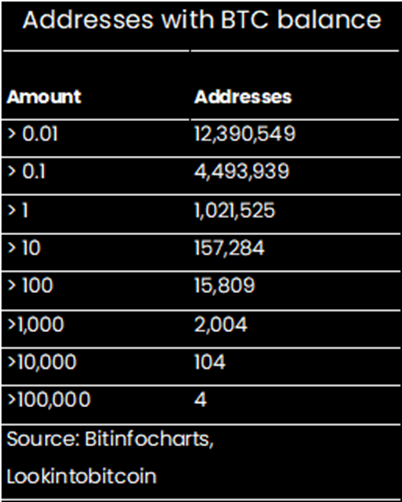
The Bitcoin wallet rich list comprises addresses with BTC balances. Many have heard of rich lists, but what do they truly signify? A rich list provides insight into how much value an entity or individual holds. Typically, this includes various assets such as BTC, commodities, bonds, stocks, real estate, land, patents, IP rights, fiat currency, and more.

However, for the purpose of this discussion, I will focus on BTC wallets.

What makes BTC unique is its open-source nature, allowing you to monitor every wallet and assess their activity, serving as valuable indicators.

You might wonder about layer 2 Lightning usage (locked coins in contracts), stablebitcoins, and derivatives based on BTC (such as futures and options). It’s true that these often operate within more closed systems that are challenging to track, but it is still possible to some extent.

It’s important to acknowledge that numerous individuals and organizations control multiple addresses. Some addresses even hold the BTC of multiple people and organizations. Additionally, there are addresses containing BTC that are currently inaccessible due to the loss of private keys, whether regular or multisig. The provided figure below is not entirely precise, but it offers a reasonable estimate. Please regard this figure as somewhat outdated, when you read this.

For those interested, I encourage you to explore the statistics related to unique active addresses used per day, month, or year on the Bitcoin network – a fascinating area to delve into – setup a full node.

Focus of centralized exchanges

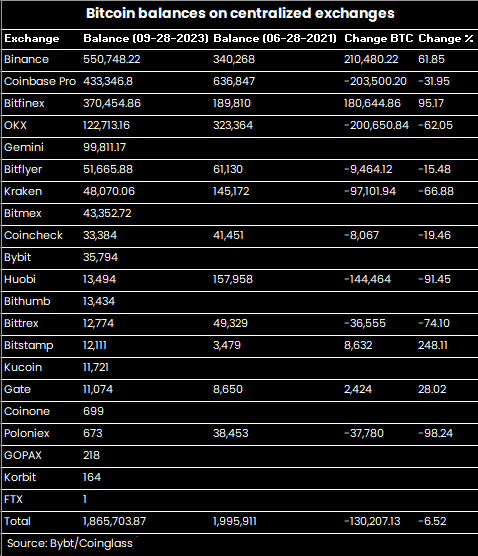
Reflecting on the changes observed over the past year, I couldn’t help but ponder the evolving landscape of centralized exchanges (CEXs), particularly after scrutinizing the FTX trial.

As mentioned earlier, some wallet addresses hold BTC on behalf of numerous individuals or organizations. The key concept here is custodianship.

Custodians often maintain cold wallets with substantial BTC holdings, which may encompass the assets of millions who utilize their custodial services. Think of CEXs, companies listed on the stock market, funds, ETFs, ETNs, and so forth.

Let’s examine the data from the past 9 quarters, covering a span of 2 years and 3 months, from June 28, 2021, to today, September 28, 2023. Given the improved data available today, I’ve gathered data points from 20 exchanges, a notable increase from the 13 exchanges considered in 2021.

It’s important to acknowledge that the data may be incomplete, and some exchanges may have undergone changes in management or ownership during this period.

It’s worth noting that traditional banks are entering the Bitcoin space, and while they may hold relatively small balances at the moment, many of them do not provide transparent reports for public scrutiny. Fractional banking has historically been a closed sector with limited access for the public. With on-chain tracking, it has become possible to trace addresses, but I’ll save a deeper discussion on this topic for another time.

However, I would like to emphasize the potential drawbacks of fractional reserve banking for ordinary citizens. It’s important to remember that nearly all people on Earth, regardless of their location or beliefs, are part of the fractional banking system, even though some may think otherwise. My focus is full reserve banking, which allows banks to lend BTC through time-deposits, where customers are able to lock up their funds for a specific period, and these funds can then be lent to borrowers.

In the current debt-based system, there is limited financial freedom, and surveillance is becoming increasingly pervasive. I do not support governments gaining more insight into the financial affairs of ordinary people through Central Bank Digital Currencies (CBDCs), especially when this information can be combined with other data. Such a scenario could easily lead to a form of government-controlled social scoring, potentially resulting in a communistic regime where governments exert greater control over their citizens.

I will stay vigilant, as evidenced by the increasing government scrutiny of personal communications in the EU, extensive camera surveillance on government-controlled infrastructure, and government-developed apps that collect extensive user data from phones, computers, digital watches, and other devices. While companies are profit-driven and also engage in data tracking, they seldom wield power over individuals in the same way as governments do.

Extra

Currently, there is a significant debate regarding the time lag between spot and futures trading in BTC. You can find more information on this topic by reading here.

Big companies are forming post-quantum cryptography coalition to secure Bitcoin.

Antimatter falls down, not up: CERN experiment confirms theory.

I’ve observed that integrating control testing into machines is often more reliable than relying heavily on humans. When individuals use machines, they sometimes forget to question the reliability of the results.

In the context of machines, errors around reliability often arise due to issues with proper time intervals, calculations, and understanding control data limits. If a machine can provide results in a file (CSV, PDF etc.) format, it can be both cost-efficient and more precise. In the case of medical machines, a standard practice includes calibrating assays (by inserting them into the machine), employing negative and positive controls (also inserted into the machine), and utilizing internal control/calibrators. Machines can be configured to perform control tests after a specific amount of time or usage (samples/batches etc.).

While humans still play a role in providing inputs and controls to machines, stationary machines are increasingly becoming fully automated, allowing humans to relax and focus on other tasks. Furthermore, it’s advisable to conduct multiple tests on the same sample or cross-test samples using different machines and methods to ensure consistent results.

Consider this: Do you know the acceptable percentage range for fluctuations in your last blood test? Did your last blood test report include information about when the machine underwent its most recent control test or calibration? I anticipate that, in the future, such details will become standard in all medical test reports for individuals purchasing tests (Vestorp stamp). Calibration and quality control tests results from each machine could be integrated into a Layer 2 solution in Bitcoin (to avoid congestion on the Layer 1 network), allowing people to directly access and link the machine control/calibration data to digital open-sourced records (in real time). It’s important to note that people’s test results should not be public to everyone, but information regarding machine calibration and quality controls should be made available.

It’s crucial not to blindly trust machines or the companies/people providing results unless they provide this vital information for transparency and accountability. If you are interested in medical machines it’s also worth exploring the principles of the “Westgard rules”.

Quote:

Trading can encompass various methods derived from other areas of research.

Tipping page logo

Support with Sats!

Enter Tipping Amount

Powered by BTCPayWall

Mining, Energy grid, ESG and ETFs

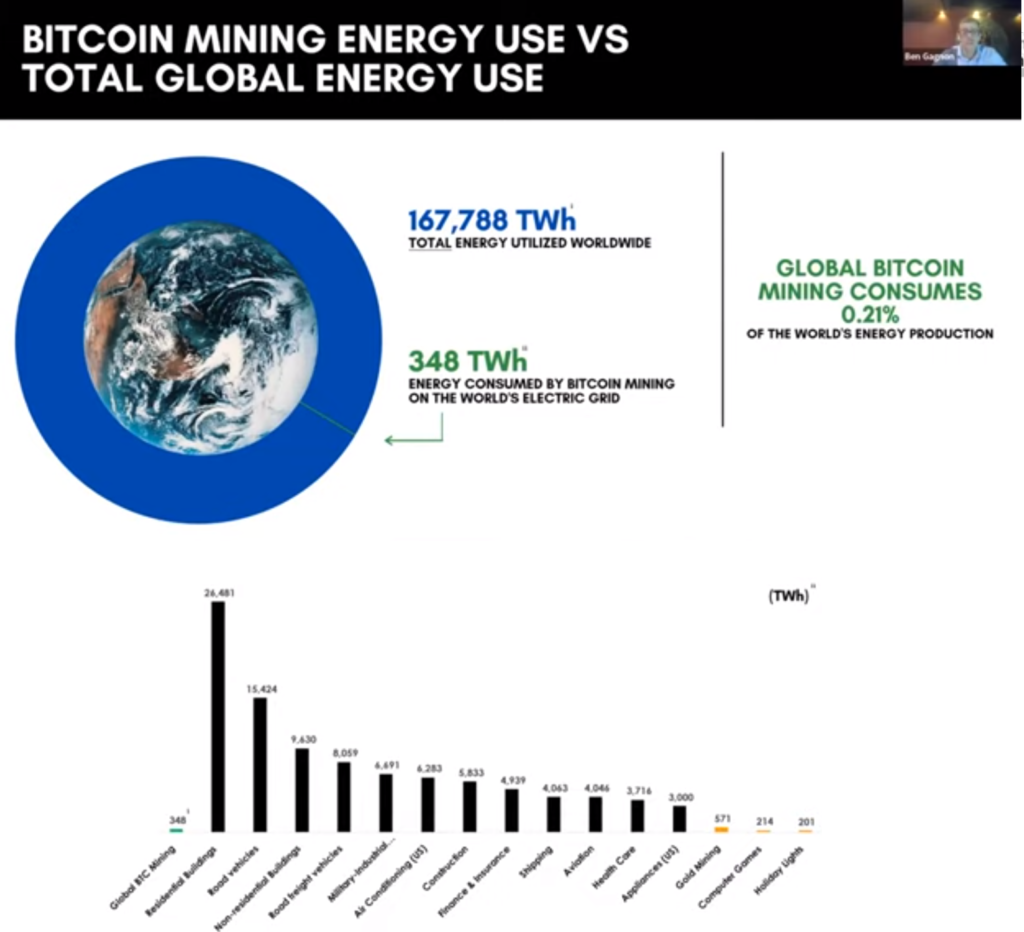
An interesting talk about Bitcoin mining – check it here.

While Bitcoin’s energy consumption has been a subject of concern, its potential to positively impact energy grids and ESG principles cannot be overlooked. Achieving these benefits requires a collaborative effort between the mining industry, energy providers, regulators, and environmental organizations to promote sustainable practices and prioritize the use of renewable energy sources.

A few points about Bitcoin mining

Energy Arbitrage: Bitcoin mining can play a role in optimizing energy consumption by using excess or wasted energy that would otherwise go unused. This is especially relevant in the case of intermittent renewable energy sources like wind and solar power. Miners can set up operations near these sources and utilize surplus energy during periods of high production, effectively reducing energy wastage.

Grid Stability: Bitcoin mining operations, when located strategically, can act as a stabilizing factor for the energy grid. They can adjust their energy usage in response to grid conditions, either by reducing mining activity during peak demand or increasing it when there’s an excess of energy. This helps to balance the grid and reduce the risk of blackouts.

Economic Growth in Remote Areas: Bitcoin mining can stimulate economic activity in remote and underdeveloped regions. Miners often establish operations in areas with abundant renewable energy resources. This economic growth can lead to improved infrastructure, education, and healthcare services in these regions, benefiting local communities.

Job Creation: Bitcoin mining operations require a workforce for maintenance, security, and management. As the industry grows, it generates job opportunities, particularly in regions that have struggled with economic challenges. This job creation can have a positive social impact by reducing unemployment rates and improving local economies.

Promoting Innovation: The demand for energy-efficient mining solutions in the Bitcoin industry has spurred innovation in energy-saving technologies and hardware. These innovations can have broader applications beyond Bitcoin mining, contributing to more energy-efficient practices in other industries. Just look at how immersion and hydro mining are capturing waste heat.

Reducing Flaring and Waste: In some regions, natural gas is flared or wasted during oil extraction due to lack of infrastructure for transport or utilization. Bitcoin mining operations can convert this otherwise wasted natural gas into electricity, reducing environmental harm and harnessing a previously untapped energy source.

Global Accessibility: Bitcoin operates on a global scale and can provide access to financial services for individuals and communities in all regions. Setup a mining rig and start contributing to BTC.

ESG-friendly aspects of Bitcoin

Financial Inclusion: Bitcoin has the potential to foster financial inclusion by providing access to financial services for individuals who are unbanked or underbanked. This aligns with the social aspect of ESG by reducing disparities in financial access and empowering marginalized communities.

Reduction of Middlemen: Bitcoin’s peer-to-peer nature reduces the need for intermediaries in financial transactions. This not only lowers transaction costs but also reduces the risk of corruption and fraud, promoting transparency and governance within financial systems. This safeguards consumers, promotes trust, and aligns with the social aspect of ESG by protecting consumers from fraudulent products.

Reducing the Carbon Footprint: Some mining operations are located in regions with abundant clean energy, and the industry is increasingly focusing on utilizing renewable sources to power mining operations.

Bitcoin can be used to monitor and report on carbon emissions and climate impact in real-time. This transparency supports environmental ESG goals by encouraging organizations to reduce their carbon footprint and adopt greener practices.

Democratized Investment: Through the tokenization of assets, Bitcoin and layer 2 technology allow for fractional ownership of assets like real estate, making investments more accessible to a wider range of investors. This aligns with the social aspect of ESG by democratizing access to investment opportunities.

Responsible Supply Chain Management: Bitcoin Layer 2 technology can be used to track and verify the origins of products, promoting ethical and sustainable supply chain practices. This transparency contributes to the governance aspect of ESG by reducing the likelihood of human rights abuses and environmental harm in supply chains.

Reduced Paper Waste: By facilitating digital transactions and digital contracts, Bitcoin reduces the need for paper-based financial processes. This aligns with the environmental aspect of ESG by reducing paper waste and lowering the environmental impact of financial operations.

Community Empowerment: Bitcoin mining operations often engage with local communities, providing jobs and economic opportunities. This social engagement can lead to community development projects and empowerment, contributing to the social aspect of ESG.

Open Innovation: Bitcoin layer 1 and layer 2 are open-source technologies, fostering collaboration and innovation among developers and organizations. This openness encourages the development of ESG-related solutions and technologies that can benefit society and the environment.

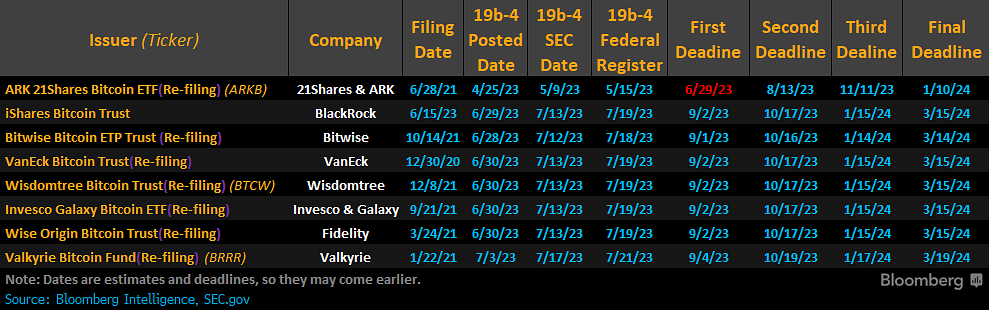
Update on spot BTC ETFs in US

Blockrock

Bitwise

VanEck

Fidelity

21Shares and Ark Invest

Invesco & Galaxy

Wisdomtree

Valkyrie

Franklin Templeton – Filing date 09/12/23

Grayscale (Filing to convert: GBTC to Spot BTC ETF)

Read the older article about BTC ETFs here.

New mining rigs arriving in March 2024 are significantly improving efficiency.

S21 (200 Th/s, 3550 W, efficiency 17.8 J/TH) and S21 Hyd (335 Th/s, 5360 W, efficiency 16 J/TH ).

Ultra-low radiation cables reduce background noise for neutrino and dark matter detectors.

Quotes

Young people can die, old people must die. This regime have to die. Fight ageing, start biohacking.

Consider Earth as a spaceship rotating and revolving in space. Exercise caution when contemplating any attempts to alter its course or position.

Remain vigilant

In the vast digital expanse of cryptocurrency, Bitcoin reigns supreme as the pioneer and leader. As we continue to explore the ever-expanding frontiers of Bitcoin’s potential applications, one crucial aspect rises to the forefront: security. Beyond the terrestrial realm, the importance of Bitcoin security takes on a whole new dimension when we contemplate its use in interplanetary contexts.

While the idea of Bitcoin beyond Earth’s borders may seem futuristic, it’s a concept that holds significant implications for our species’ future in the cosmos.

Two main mistakes

1. Inadequate Backups: Failing to maintain secure and up-to-date backups of wallet data can lead to permanent loss of funds in case of device failure or data corruption.

2. Regret Transactions: Users may make regrettable transactions by sending funds to incorrect addresses, and these transactions may be irreversible.

Employ best security practices

Knowledge is your best defense. There are abundant resources, online communities, and educational materials available to help you understand the intricacies of cryptocurrency security.

Staying informed about the latest security developments and remaining vigilant is an ongoing commitment.

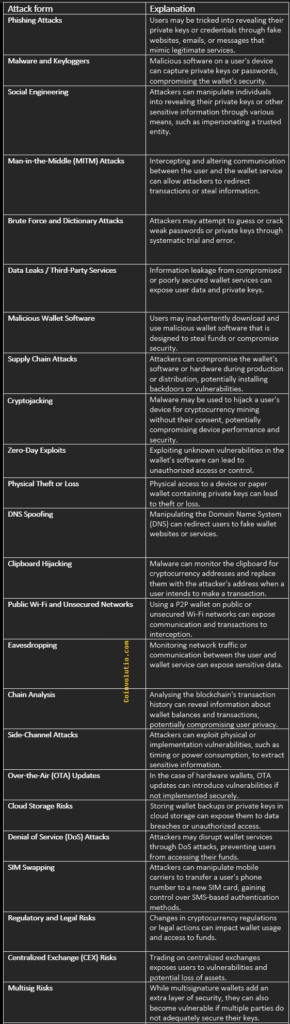
A list of attacks seen around BTC

Many of the attack forms are combined.

By comprehending security and taking control of your financial destiny in a decentralized way, you can navigate the exciting but challenging landscape of Bitcoin with confidence.

Your wealth remains under your watchful eye, protected by your understanding of the digital fortifications that keep it secure in the vast realm of decentralized finance.

Extra

Bitcoin has demonstrated remarkable reliability, boasting an uptime rate of 99.9985% since its inception in 2009. Since 2013, it has maintained a perfect 100% uptime rate for over 3,820 days.

Tipping page logo

Support with Sats!

Enter Tipping Amount

Powered by BTCPayWall