Bitcoin Use Cases: Density, Trust, and Scalability Implications

Before exploring Bitcoin’s various use cases, it’s crucial to understand how the limited blockspace, approximately 4 MB every 10 minutes, creates competition among applications, influencing their feasibility, design, and scalability. This context highlights the technical trade-offs and considerations that will be detailed in the subsequent table.

The following analysis, inspired by the article (https://bitcoinmagazine.com/technical/the-blockspace-market-a-darwinian-forge), examines the diverse ways Bitcoin is utilized, along with their respective technical approaches, trust implications, limitations, and elasticity – highlighting how Bitcoin adapts to changing demand and network conditions.

Use CaseDescriptionTechniques to Increase DensityTrust Model ImplicationsNotes
Means of ExchangeFacilitating economic exchange (e.g., peer-to-peer value transfer, fiat-BTC).Off-chain: self-custodial Layer 2s (Lightning, Ark) batch thousands of transactions into one on-chain settlement; custodial ledgers (exchanges, banks) aggregate user transfers into single transactions.On-chain: fully trustless, preserving decentralization. Off-chain: introduces liquidity constraints, timelocks, and data security needs. Custodial: requires full trust in the provider.Primary use case; demand is highly inelastic (critical to Bitcoin’s value). Needs better layer 2 density to scale.
TimestampingProving the existence of digital files at a specific time via embedded hashes.Merkle trees (aggregating multiple file hashes) and calendar servers (e.g., Opentimestamps, OriginStamp).Same as direct timestamping; only requires storing merkle proofs to verify individual files.Near-infinite density (e.g., 750 million Internet Archive files timestamped in one transaction). Minimal trust trade-offs.
Inscriptions (NFTs, Data Storage)Embedding data (images, text, files) directly on-chain for durable availability.Compression algorithms (for text/pictures) and programmatic generation (reusable components + code).On-chain: trustless (data is permanently available). Off-chain storage: destroys the trust model (data availability is not guaranteed).Density limited by information theory (compression has physical limits). Demand elasticity tied to speculation (users may abandon if fees rise).
Token ProtocolsCreating/transferring tokens on Bitcoin (LRC-20, Taproot assets, BRC-2.0, Runes, Alkenes, RGB, ARC-20 or SRC-20). Sidechains like Liquid, RSK and StacksBatching transactions, protocol-specific optimizations (e.g., Runes’ UTXO efficiency), and compressed metadata. Utilizing Layer 2s and sidechains to offload transactions and reduce on-chain data.On-chain: trustless (token ownership is enforced by Bitcoin’s consensus). Off-chain indexing: introduces minor trust assumptions (reliance on third-party data aggregators).Demand is highly elastic (tied to speculative trends). Density is limited by protocol design (e.g., BRC-2.0’s inscription size). It competes directly with other use cases for blockspace. However, demand could shift toward inelasticity as tokenized real-world assets gain prominence using Bitcoin’s security, because they serve as collateral or stores of value, not speculation.

Bitcoin DeFi

Bitcoin DeFi involves lending and borrowing via token trading using various protocols, layers (L1, L2), and sidechains. The protocols include LRC-20, Taproot assets, BRC-2.0, Runes, RGB, ARC-20 and SRC-20. Layer 2s and sidechains batch DeFi transactions off-chain, reducing on-chain blockspace. Techniques to increase density include collateral pooling, state channels, and sidechain batch transactions. The trust model for Bitcoin DeFi is trustless for on-chain settlement, but trust depends on layer 2 and sidechain security (e.g., Lightning Network liquidity providers or RSK merge mining).

Custodial (most dangerous) and non-custodial yield platforms carry historical risks, including smart contract vulnerabilities, mismanagement, and fraud, highlighting the need for rigorous due diligence.

Bitcoin DeFi is an emerging use case that leverages token and sidechain techniques for functional utility (yield, leverage). Demand elasticity is moderate, as users tolerate fees for real yield but may abandon speculative DeFi.

Future Directions and Emerging Use Cases

As Bitcoin matures, its role will evolve beyond its current use cases, driven by a simple imperative: adapt to blockspace scarcity or be outcompeted. New applications will leverage Bitcoin’s unrivaled security and decentralization, but their success will depend on innovating around its 4 MB/10 minute block limit.

Critical to this evolution are Bitcoin miners, who secure the network and allocate blockspace. Miners earn revenue from two sources: fixed block rewards (halved every four years) and variable transaction fees. As block rewards shrink (projected to fall below 1 BTC per block by 2032), fees will account for a growing share of miner revenue, gradually overtaking rewards as their primary income. This shift creates a tension: miners benefit from higher on-chain fees (driven by L1 blockspace demand) but also depend on Bitcoin’s long-term utility (driven by scalable use cases, including L2s).

In the short term, miners may prioritize L1 use cases that fill blocks and drive fees—such as inscriptions, tokens, or high-value transactions, since these directly boost their income. However, over time, miners must balance this with supporting scalability: if L1 fees rise too high, they risk pricing out core use cases (e.g., means of exchange) or driving activity to altchains, eroding Bitcoin’s dominance. This creates an incentive for miners to adapt: supporting L2s (e.g., Lightning, rollups) that increase Bitcoin’s utility without clogging L1, or advocating for protocol upgrades that improve L1 efficiency (e.g., better scripting for denser transactions).

Advancements in on-chain protocols, sidechains, and cross-chain interoperability may enable more complex DeFi applications, gaming, and tokenized assets, either directly on Bitcoin or through interconnected networks, while carefully managing scalability.

To support these emerging innovations, such as sophisticated DeFi platforms, tokenized assets, or scalable applications like Decentralized Identity (DID) systems, techniques like threshold signatures, privacy-enhancing protocols, and dedicated Layer 2 solutions (e.g., state channels, rollups) are essential. These methods increase data density, reduce the amount of information stored on-chain, and improve scalability, thereby expanding the capacity for diverse functionalities without exceeding Bitcoin’s blockspace limits.

Ultimately, these developments will shape Bitcoin’s role not only as a store of value but also as a versatile platform capable of supporting a broad ecosystem of decentralized applications, social platforms, and innovative services – all while maintaining efficient use of its limited blockspace.

Stay updated on Q

A new proposal, not yet a BIP, was submitted 3 days ago.

Title: Post Quantum Migration and Legacy Signature Sunset

https://github.com/jlopp/bips/blob/quantum_migration/bip-post-quantum-migration.mediawiki

Have you read the Quantum Hunter, which was released 7 days ago? In this fiction story a guy steal the coins, but maybe he will not be able to if this proposal becomes a reality.

https://inscripedia.com/collection/686f4515bbcb899804aec908

Should coins be frozen/ burned, or left stealable, that is the question.

I personally believe that people need to migrate, and if they fail to do so, they have failed. They should not have forever to do it, as delaying can lead to speculation and cause significant disruptions in the market later on, similar to how a quantum hunter could create major market disturbances.

Quantum expanders

Last year, I was exploring the concepts of quantum expanders and their potential impact on Bitcoin.

In the Lightning Network, designed for fast, off-chain transactions, the emergence of quantum expanders could be transformative. While classical expanders enhance connectivity and performance, quantum expanders promise to further improve scalability, security, and fault tolerance.

Remember to check out Presidio’s Quantum Bitcoin Summit, it’s live here:

https://www.youtube.com/watch?v=GeUdu4hrBPI

Check your address here: https://quantumrekt.com

Current Estimate of Vulnerable BTC block 900,000:

~6.51 million

  • 4.49 million – Address reuse
  • 1.72 million – P2PK
  • 0.15 million – P2TR
  • 0.15 million – BCH Fork exposure

Guide for innovative countries

Proposal for the Establishment of a National Strategic Bitcoin Reserve

Guide for innovative countriesEasier to see

Link to old El Salvador article:
https://www.docdroid.net/Iw5EKJV/bitcoin-el-salvador-one-country-a-fiat-currency-and-bitcoin-pdf

Keep in mind that government entities still officially hold only about 2.5% of the total Bitcoin supply. Notably, countries like Norway and Saudi Arabia indirectly own Bitcoin through investments in publicly traded companies that hold Bitcoin.

Overview of Bitcoin Holdings by Countries and Governments

https://bitbo.io/treasuries/countries

https://bitcointreasuries.net/governments

Follow the State Reserve Race in USA:

https://bitcoinlaws.io/reserve-race

https://bitcoinreservemonitor.com

The European Union and ECB are frustrated with Bitcoin (https://papers.ssrn.com/sol3/papers.cfm?abstract_id=4985877), feeling they were late to the party. They are now doubling down on CBDCs, which they plan to turn into a highly surveilled black box.

Currently 137 countries and currency union, representing 98% of global GDP, are exploring a CBDC. China still does not disclose extensive information about the circulation of E-CNY, which is part of their Currency in circulation.

Bitcoin can be verified on-chain, making it the most transparent currency of choice – unlike CBDCs.

https://rumble.com/v5e69f1-the-cbdc-black-box.html?e9s=src_v1_cmd%2Csrc_v1_ucp_a

Some of the models Central Banks are currently examining.

https://rumble.com/v5gdakt-economic-theories-and-the-future-of-cbdcs.html?e9s=src_v1_cmd%2Csrc_v1_ucp_a

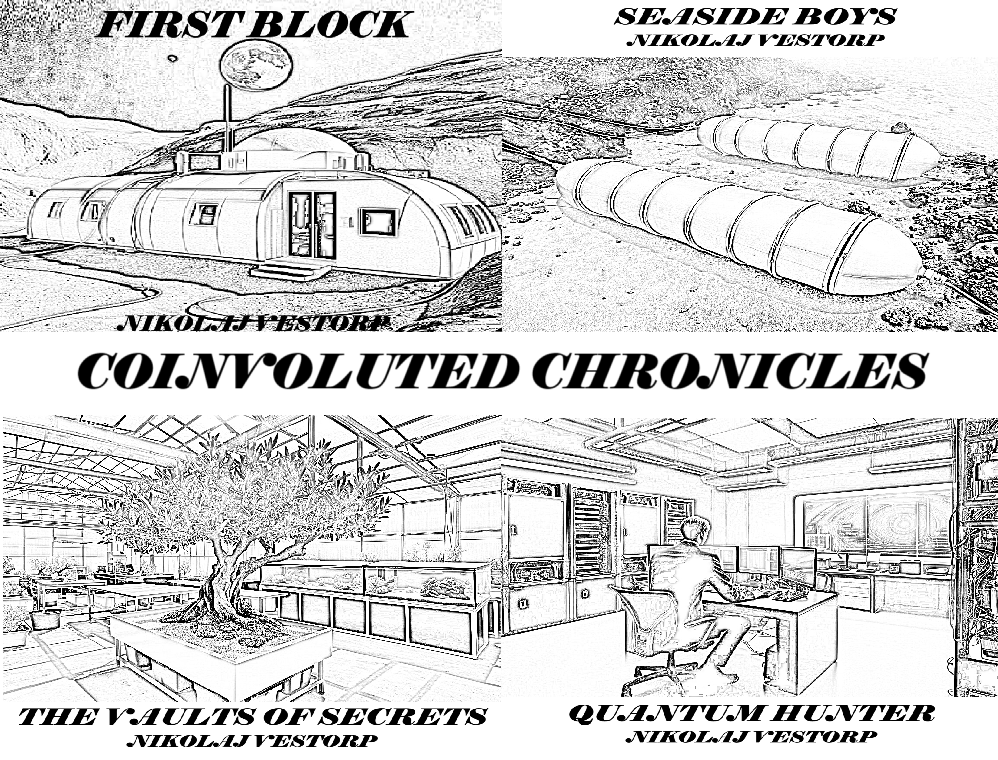
Coinvoluted Chronicles

A new digital collection will be released tomorrow, 11 July, featuring four unique Bitcoin stories stored directly on the Bitcoin blockchain as EPUB files.

These are limited in supply and combine storytelling with blockchain technology, offering a novel way to experience narrative art.

Each story is available at the same price 0.00021 BTC + fees and which story you receive is determined randomly at the time of purchase, adding an element of surprise.

Once acquired, the story is stored securely in your Bitcoin wallet as an inscribed asset.

Here are the stories included:

🌕 First Block
A quirky Bitcoin miner living solo on the Moon, growing mycelium for breakfast, engaging in clandestine meetings at the Cargo Center, and waiting 137 days for his “Celebration” alarm to activate.
Supply: 891

🌊 Seaside Boys
After selling his African solar farm for Bitcoin, an obsessed miner teams up with ex-DARPA researcher Dr. Zhang to deploy autonomous titanium pods 500 meters beneath international waters, where his “Leviathan Protocol” will create self-repairing, self-defending nodes powered by crab-sized robots
Supply: 1335

🔒 The Vaults of Secrets
A paranoid Bitcoin holder encrypts private keys within bacteria, olive trees, and bioluminescent coral, decryptable only under specific seasonal conditions, such as the summer solstice.
Supply: 1092

🔬 Quantum Hunter
A researcher develops a quantum computer designed to recover billions of dormant Bitcoin wallets, raising questions about the ethics of “reclaiming lost fortunes” amid the hum of superconducting qubits.
Supply: 1024

For more details, visit: https://inscripedia.com/collection/686f4515bbcb899804aec908. To participate, connect your wallet and acquire your inscription.

Ascending the Kardashev Scale.

I admire Nikolai Kardashev’s work immensely. His scale is a brilliant way to measure civilizations’ technological prowess based on how they harness energy. It’s a captivating way to categorize the potential of extraterrestrial societies.

The three classifications, from Type I to Type III, signify levels of energy mastery that are mind-boggling. From a civilization using all available energy on its planet to harnessing an entire star’s power or even controlling energy on a galactic scale, it’s like a roadmap to what could be possible.

The scale consists of three main types:

Type I Civilization 1016 W: Capable of harnessing all available energy on its native planet (Earth). This might encompass optimizing energy sources like nuclear (fission and fusion) solar, wind, geothermal power, along with refining energy production and consumption.

Type II Civilization 4*1026 W: Possess the ability to harness the energy emitted by an entire star. This could involve constructing colossal structures, such as Dyson spheres or swarms encircling the star, to capture its energy output.

Type III Civilization 4*1037 W: Capable of controlling energy on the scale of its entire galaxy. This might encompass harnessing the energy output of numerous stars, potentially utilizing advanced technologies or methodologies currently beyond our comprehension.

Kardashev’s scale doesn’t explicitly detail the methods or technologies a civilization might use to ascend these levels, but it implies that progression involves increasingly efficient methods of energy capture, storage, and utilization.

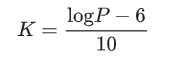
Carl Sagan expanded upon the Kardashev Scale by utilizing data extrapolation. He introduced a continuous function to quantify the scale, denoted by the index K, where the variable P signifies the energy consumption rate measured in Watt.

Currently, mankind is measured on the scale at around K =  ~ 0.7276. Humanity has yet to achieve even the first level of civilization on the Kardashev Scale.

However, the scale is more theoretical than prescriptive. It’s important to note that reaching higher levels on the Kardashev Scale involves significant technological, societal, and possibly even evolutionary advancements. Achieving these levels might necessitate breakthroughs in physics, engineering, energy generation, and resource management, among other fields.

Exploring ways to ascend the Kardashev Scale involves considering ambitious possibilities

Interstellar travel and colonization: Venturing beyond our home planet to explore and colonize other celestial bodies opens doors to new energy resources. The expansion across planets, star systems, or even galaxies could unlock diverse energy sources essential for a civilization’s growth.

Advanced energy technologies: Pushing the boundaries of energy capture and utilization is pivotal. Advancements in fusion reactors, and even unconventional sources like black holes or dark matter could revolutionize energy generation, fueling a civilization’s progression.

Harnessing exotic energy sources: Imagining harnessing energy from celestial phenomena like quasars, gamma-ray bursts, or tapping into vacuum energy pushes the limits of technological ingenuity. These exotic sources might harbor immense energy potential for highly advanced civilizations.

Yet, while Kardashev’s scale gives us a framework to contemplate energy utilization in civilizations, the routes to ascend this scale remain speculative.

Achieving higher levels would demand remarkable strides in scientific comprehension and technological prowess, inviting groundbreaking advancements to redefine our understanding of energy.

What can Bitcoin do?

Bitcoin isn’t a direct vehicle for propelling civilizations up the Kardashev Scale, measuring cosmic energy mastery. But, the idea of a currency backed by electricity and mining hardware stems from the concept of tying the value of a currency to something tangible and resource-intensive.

Bitcoin symbolizes a groundbreaking approach to decentralized finance and value transfer, offering potential implications for civilizations aspiring to higher Kardashev echelons.

Global currency: Bitcoin, as a decentralized digital currency, transcends borders and authorities. In a sprawling civilization spanning planets or star systems, a universally accepted, borderless currency like Bitcoin could streamline interstellar trade and transactions. There are still some limits with the speed of light, slightly touched in this article.

Decentralized technological advancement: Built on blockchain technology, Bitcoin offers secure, transparent, decentralized record-keeping. This tech’s adoption might prove pivotal in managing intricate systems, communication, and resource allocation within advanced civilizations, sans a central authority.

Electricity as a measure of value: Electricity is a fundamental resource in modern society and increasingly crucial for technological advancement. A currency backed by electricity implies that its value is directly linked to the energy expended to produce it. This could provide a more concrete and quantifiable basis for the value of the currency.

Resource allocation and efficiency: The blockchain’s transparent tracking of transactions could revolutionize resource management in a multi-planetary society. Bitcoin could optimize advanced communication, robust infrastructure, resource allocation, tracking, and management across colonies, enhancing energy distribution and utilization.

Chip industry and mining hardware: Bitcoin’s proof-of-work mechanism demands specialized hardware like ASICs for mining. This pursuit has fired up innovation in the chip industry, driving companies to craft more potent, efficient chips tailored for Bitcoin mining. The result? A leap in chip manufacturing prowess, pushing the boundaries of computational capabilities and efficiency.

Quantum computing and security: Quantum computing poses a looming challenge to conventional cryptographic systems, including those safeguarding Bitcoin. The immense computational might of quantum computers threatens to crack existing encryption methods. Yet, discussions swirl around the quest for quantum-resistant cryptographic algorithms. Bitcoin’s blockchain is the proving ground for developing and scrutinizing these quantum-resistant cryptographic solutions. Shielding the network from potential quantum threats stands as a focal point in ongoing research within the Bitcoin community.

Incentivizing innovation: Bitcoin’s mining concept incentivizes securing the network through computational power. By tying a currency to electricity, there’s an inherent incentive to produce more energy efficiently. In an advanced civilization, where energy management is crucial, this could encourage the development of sustainable energy sources and efficient energy distribution systems. This model could extend to incentivizing scientific research or technological breakthroughs vital to civilization’s growth, nudging progress on the Kardashev Scale.

These elements could form the bedrock of managing energy, resources, and interactions within a multi-planetary or interstellar civilization, potentially aiding the journey toward higher Kardashev Scale levels.

Why not Fiat Currencies/CBDC:
The scales tip differently between fiat currencies/CBDC and the journey up the Kardashev Scale.

Fiat currencies/CBDC, like the dollar, euro, yen or yuan rely on trust in governments and economies rather than tangible assets. But for a civilization’s ascent up the Kardashev Scale, they might not quite fit:

Global limitations: Fiat currencies are tied to specific nations, hindering seamless trade across celestial realms. Imagine an advanced civilization needing a universal, borderless currency for spanning planets— a need beyond what fiat currencies can meet.

Centralized control: Controlled by central authorities, these currencies don’t align with the decentralized ethos needed for managing resources across diverse celestial bodies. In an advanced society, decentralized systems might ensure transparency, security, and efficiency in transactions and resource management.

Intrinsic worth: Fiat currencies lack inherent backing by physical assets like gold. For a multi-planetary civilization, a currency tied to a tangible resource, say electricity or energy, could better reflect actual resources spent, offering a more stable valuation basis.

While fiat currencies serve our current economic needs, their centralized nature and lack of intrinsic value might not befit an advanced civilization navigating multiple planets or star systems. A currency rooted in tangible resources could better align with the complexity and scale of a multi-planetary society’s economic requirements.

My take

As civilizations strive for higher echelons on the Kardashev Scale, the choice of currency becomes pivotal. Bitcoin emerges as a beacon of innovation and possibility compared to fiat currencies.

Bitcoin’s underlying technology, ethos, and adaptability make it a promising candidate for civilizations seeking to ascend the Kardashev Scale. Its borderless nature, decentralized foundation, and tangible value backing paint a canvas of a currency aligning seamlessly with the complex economic needs of an advanced multi-planetary society.

Finally, I haven’t delved into the Drake equation, but in my view, if there are other civilizations, they most likely do not utilize fiat currencies.

Tipping page logo

Support with Sats!

Enter Tipping Amount

Powered by BTCPayWall